


RDUE Regulations
So-B-Green's support offer
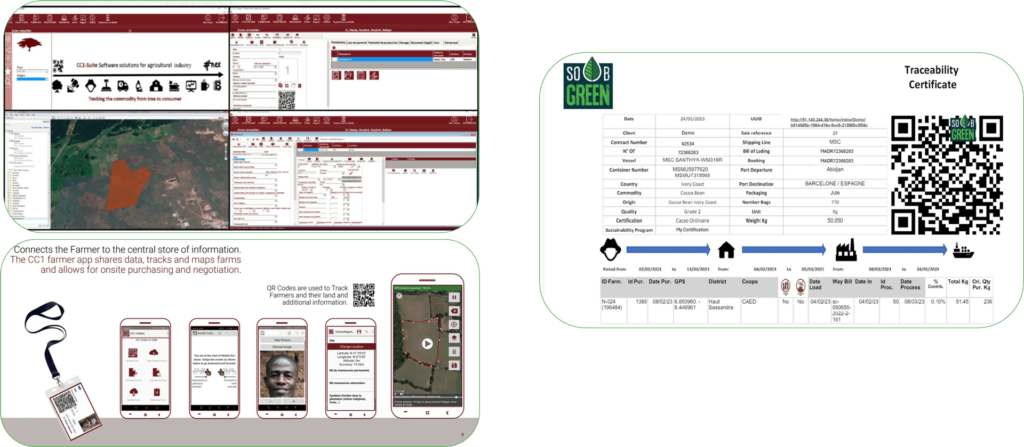
Traceability has been a pillar of our DNA since the very beginning of So-B-Green. We systematically use traceability software in the deployment of our activities. We have standardized a traceability certificate for each container or BL, enabling us to trace the physical flow of your commodity from producer to exporter.
Combining field and analytical expertise, we provide a precise response to traceability requirements & to help our customers comply with the new RDUE regulations.
?
Background to RDUE regulations
In response to growing concerns about the harmful impacts of trade linked to deforestation, the European Union has introduced new regulations aimed at combating this phenomenon. This initiative is part of the European Green Pact, launched in 2015 during the Paris agreements.
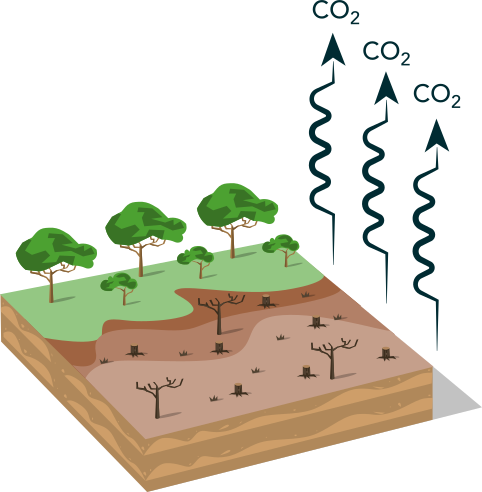
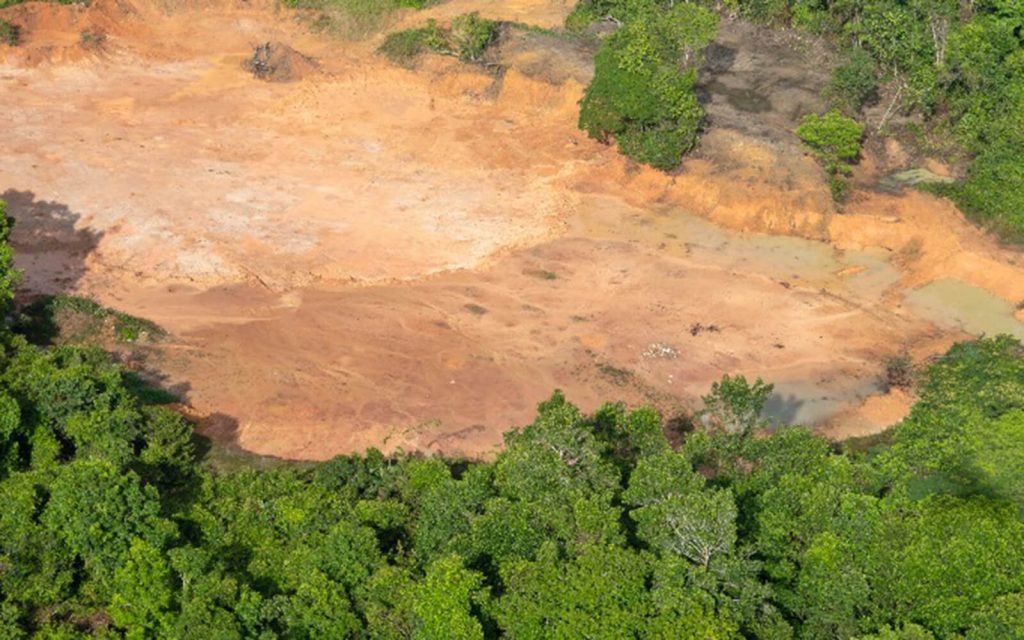
Deforestation, which exerts considerable pressure on the climate, biodiversity and human rights, mainly affects sub-Saharan Africa and South-East Asia, where it has accelerated in recent decades.
In response to this situation, the European Union is committed to reducing its global ecological footprint. The policies designed specifically target imported deforestation, in order to protect the environment and local populations.
Deforestation in figures
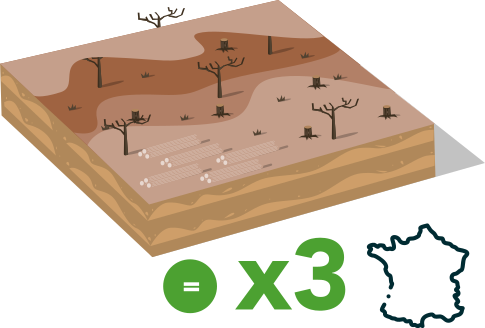
420 million hectares of forest were deforested between 1990 and 2020 , i.e. 3 times the size of France
x3
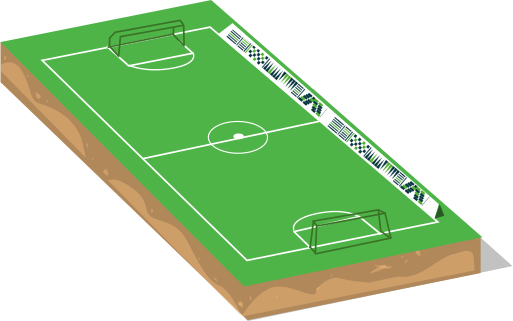
The equivalent of 3 soccer pitches are deforested every minute
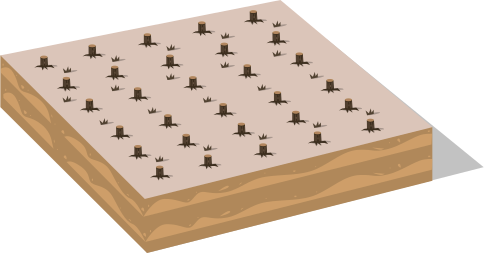
22.8 million hectares of deforested land by 2022
What is the RDUE?
Who does the RDUE concern?
These regulations apply to :
1.operators
Companies placing relevant raw materials on the EU market or exporting them.
2.traders
Companies (those trading goods already placed on the EU market) are responsible for storing and sharing information (with national competent authorities, on request) on their supply chains.
The RDUE, its workflow?

1 This is the title
Lorem ipsum dolor sit amet, consectetur adipiscing elit. Ut elit tellus, luctus nec ullamcorper mattis, pulvinar dapibus leo.
2 This is the title
Lorem ipsum dolor sit amet, consectetur adipiscing elit. Ut elit tellus, luctus nec ullamcorper mattis, pulvinar dapibus leo.
3 This is the title
Lorem ipsum dolor sit amet, consectetur adipiscing elit. Ut elit tellus, luctus nec ullamcorper mattis, pulvinar dapibus leo.
So-B-Green engages your stakeholders and suppliers to ensure quality data collection.
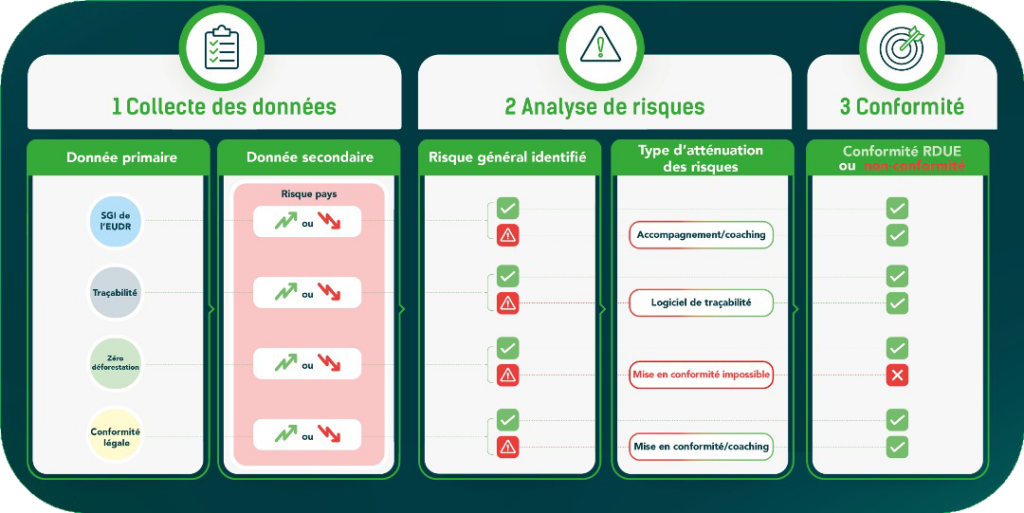
By combining the intervention of our teams in the field with the use of advanced technological tools and/or remote data collection from your suppliers, we centralize, correct if necessary and verify the data transmitted. Data collection is based, among other things, on :
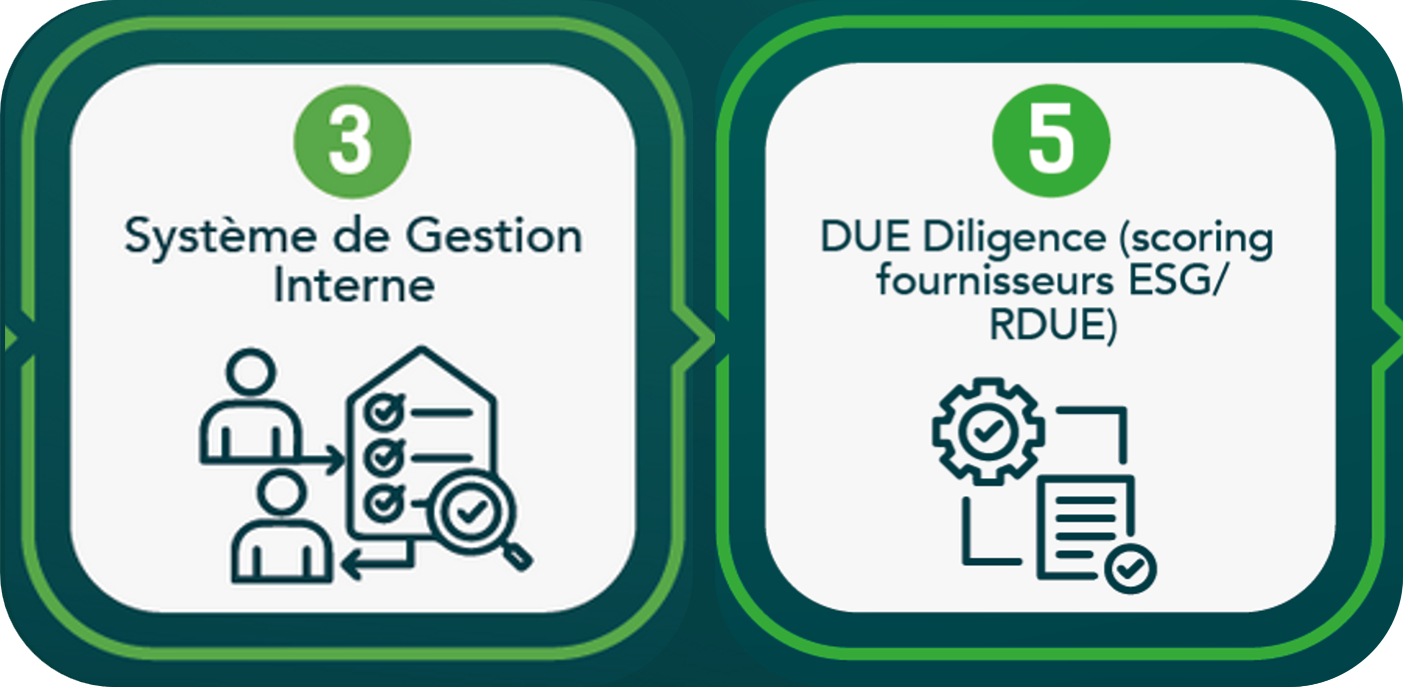
– Presence of an Internal Management System for RDUE
– Existence of a traceability system
– Presence of a Territorial Management System
– Legal compliance of the players in your supply chain
This information gathering is an essential step in the risk analysis process.
By combining analytical expertise and satellite monitoring, So-B-Green can help you analyze risks by assessing the following elements as part of your Declaration of Due Diligence:
– Internal Management System
Assessment of compliance plan and use of appropriate mapping and monitoring tools.
– Traceability system
Verify product traceability and authenticity throughout the supply chain.
– Risk of deforestation
Evaluate the presence of deforestation in accordance with the deadline and the provisions of articles 3a and 3b of the regulations, while assessing the risk of future deforestation.
– Legal compliance
Check that all players in your supply chain comply with national legislation.
Thanks to our decision tree, we can then offer our customers a decision-making tool to help them deal with the risks identified.
So-B-Green supports you in mitigating identified risks. To do this, we intervene :
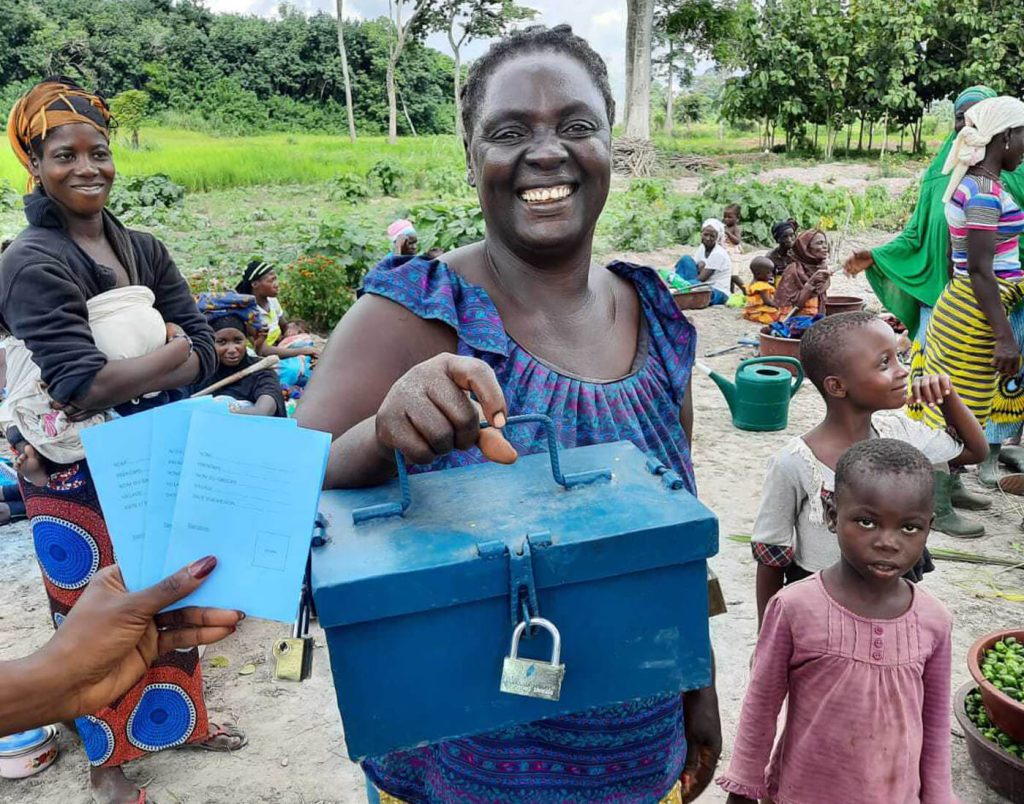
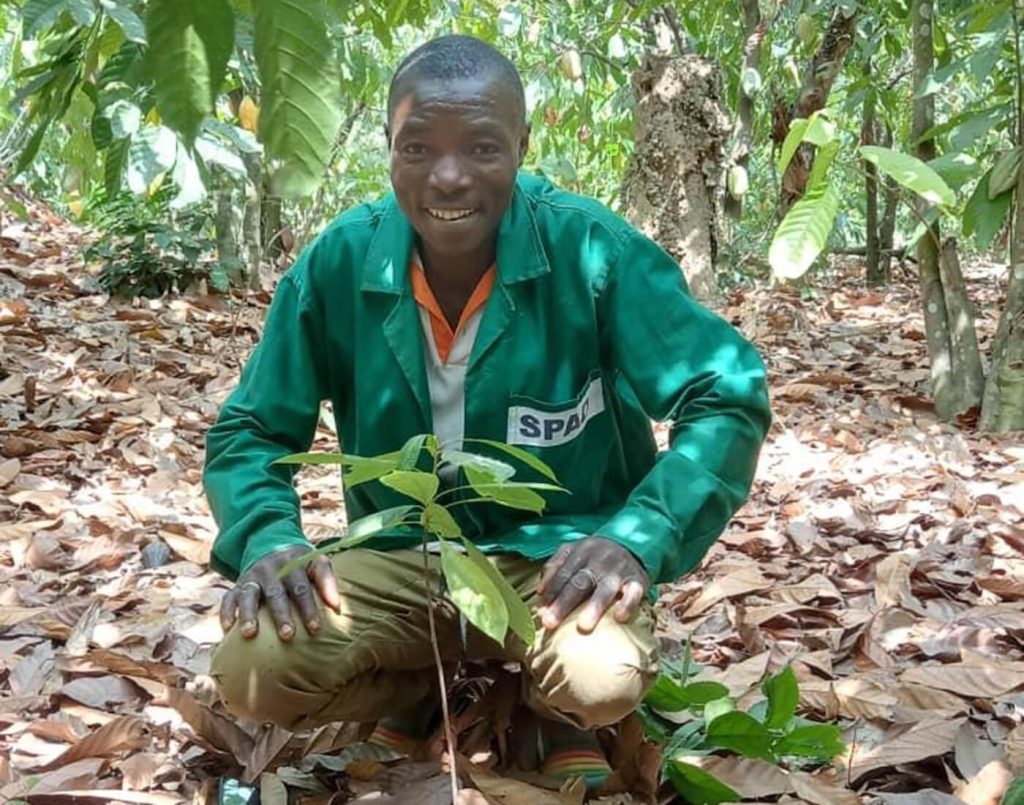
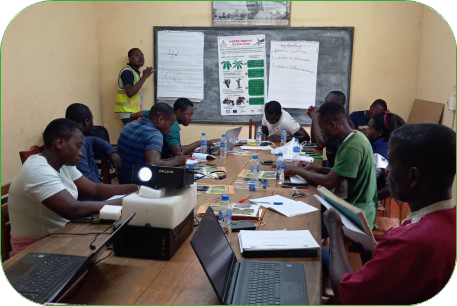
– In the field, to strengthen the capacity of industry players, through coaching and training initiatives.
– To work with local authorities to strengthen local governance.
– To deploy a traceability system.
– Perform ad hoc audits on request
How will So-B-Green support you?
Since the announcement of the proposal for this regulation in November 2021, So-B-Green has been following the development process with the utmost attention in order to be able to best respond to changes in the regulations. Drawing on our experience and with the support of our partners, we are improving and updating our range of due diligence tools and other resources to support companies and relevant stakeholders in complying with the EUDR.
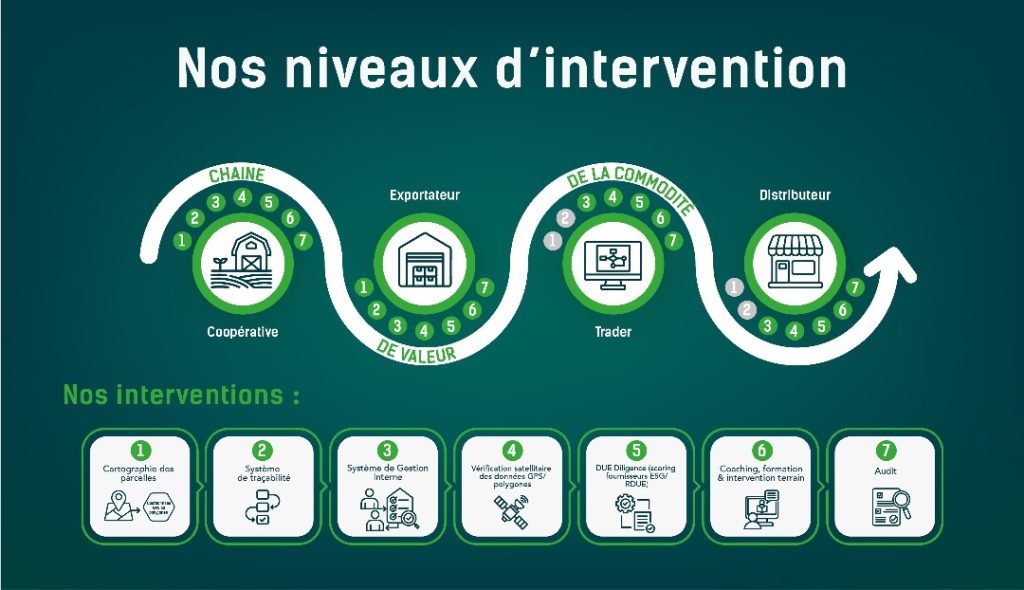
Our level of intervention
Thanks to its innovative and versatile approach, So-B-Green is able to intervene in a diversified and adapted way, offering complete and effective solutions to ensure compliance with the new requirements of the RDUE law, while supporting companies in their transition to more sustainable and environmentally-friendly practices.

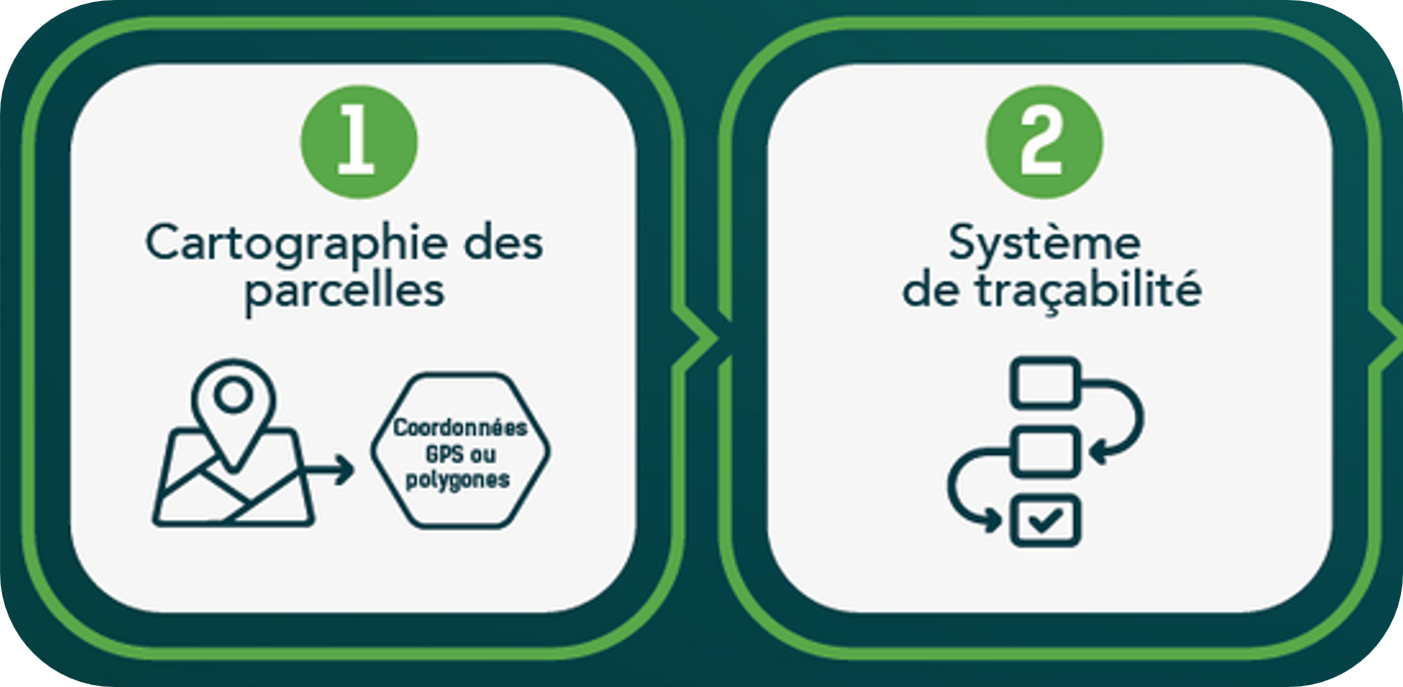
Mapping plots & setting up a traceability system
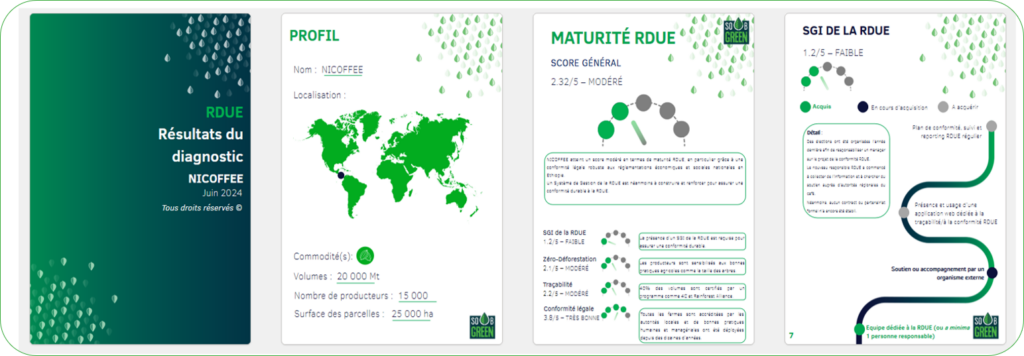
SBG's RDUE assessment of your value chain actors
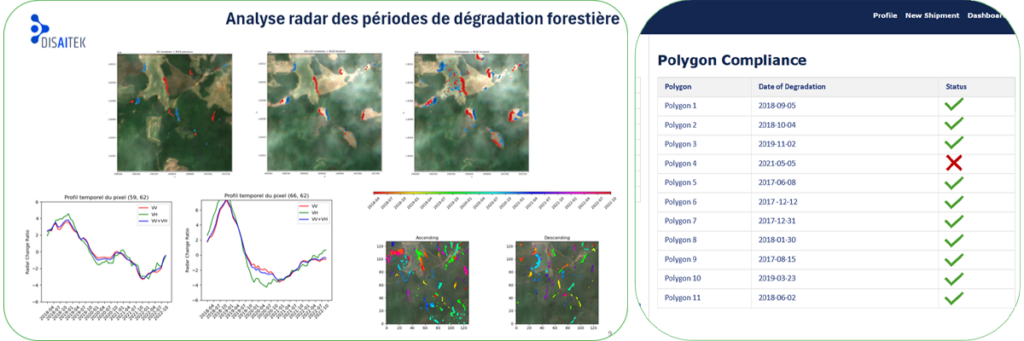
Satellite verification of polygons
The decision tree
Coaching, training, audit & field intervention
So-B-Green’s approach allows you to :
- Capacity building, deforestation awareness-raising
- Consulting and change management
- Agroforestry training
- Support for local environmental governance
- Programs to combat child labor
- Gender equality support program
Certification
Producer resilience
Regional resilience
Our approach is to guarantee our partners a deforestation-free supply chain, while encouraging responsible farming practices that respect existing ecosystems.
So-B-Green FAQ
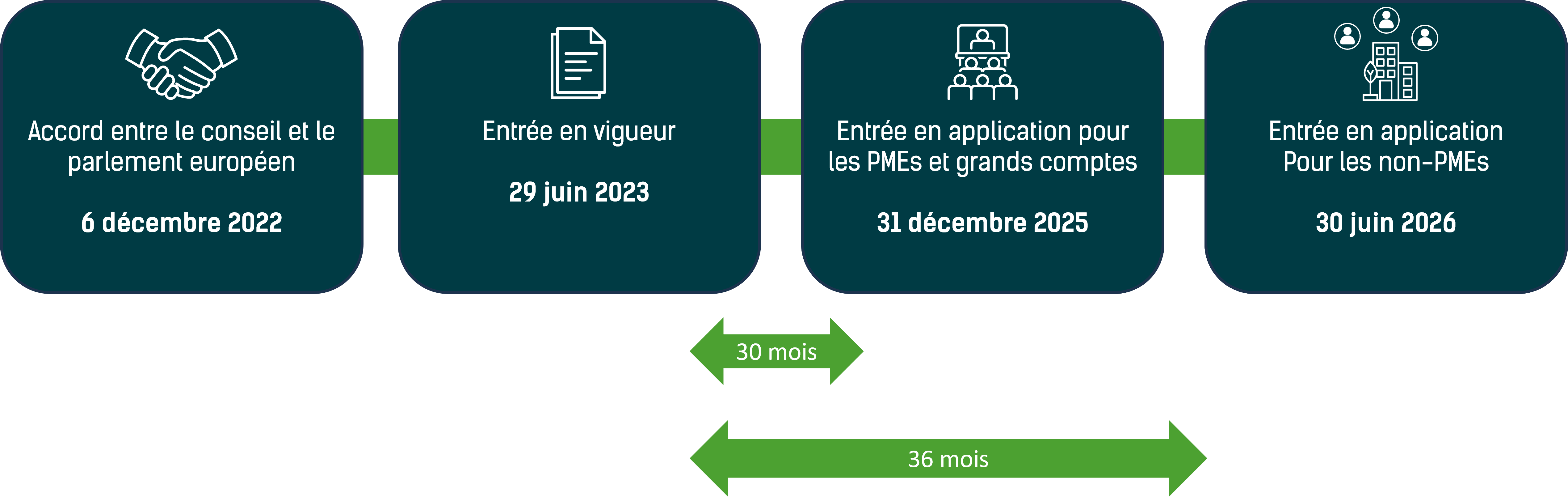
On December 6, 2022, an agreement was reached regarding the new RDUE regulation, which took effect on June 29, 2023. These regulations will take effect on December 31, 2025, with a specific implementation date for SMEs set for June 30, 2026.
Operators: Companies placing raw materials linked to deforestation on the EU market or exporting them.
Traders: Companies (those trading goods already placed on the EU market) are responsible for storing and sharing information (with national competent authorities, on request) on their supply chains.
Operators and traders will have to include geolocation coordinates in due diligence declarations before placing products on the market or exporting them.
What are the requirements?
- Accurate information gathering: operators & traders must ensure that information on product description and quantities is correctly filled in. In addition, information on the geolocation of the farm and information on the growers will be requested.
- Risk assessment: Levels of risk are determined by various factors, such as the presence of forests and deforestation, conflicts over land rights with indigenous communities and so on.
- Risk mitigation: It will be important to work on a risk mitigation approach.
Go to the text of the law: www.deforestationimportee.ecologie.gouv.fr